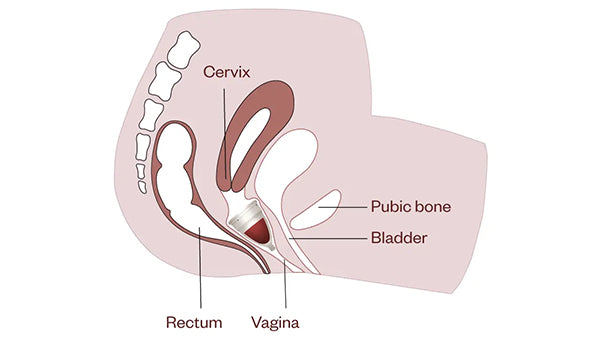

If you’re used to tampons, the DIVA™ Cup may take a little getting used to!

Unlike a tampon, the cup isn’t meant to sit high near your cervix. Instead, gently guide it back and down toward your tailbone. Once it's inserted, give it a gentle rotation in either direction to help it open and settle comfortably in place. It may take a couple of cycles to get the positioning right but once you get it, you’ll never go back.


Coming from another menstrual cup?

That’s great—but keep in mind that every cup is a little different. Cups can vary in size, shape, and silicone flexibility, so even if you’re an experienced cup user, it may take a little time to get used to how the DIVA Cup feels and fits for your body.

If this is your first time using an insertable period product, be patient with yourself! It can take a little practice to feel comfortable with insertion and find the positioning that works best for your body.

Feeling a little resistance at the vaginal opening?

That’s completely normal. You may notice some tension as you insert your cup, especially as it passes through the vaginal opening.

Taking a moment to relax can make insertion more comfortable and help your cup move into position. Try taking a deep breath into your belly, then slowly breathe out while consciously relaxing your pelvic floor muscles. A warm shower or bath before insertion may also help you feel more relaxed.

Once the cup has passed through the vaginal opening, insertion should become easier as you continue following the steps.

Where should your DIVA Cup sit?

The DIVA Cup is designed to sit lower in the vaginal canal than a tampon. When inserting your cup, avoid pushing the stem more than 1/2 inch (1.27 cm) into the vagina. Inserting the cup too high may contribute to leaks and can make removal more difficult.

The cup should sit lower in the vaginal canal, with the stem resting just inside the vaginal opening, between the labia, rather than pointing upward like a tampon. When your cup is positioned correctly, the stem should feel comfortable and shouldn't cause irritation.

Having trouble getting your DIVA Cup to open during insertion?

Try experimenting with different folds to find one that works best for you. You can also allow the cup to begin opening before it's fully inserted. This may give the cup more space to open and can make insertion easier.

If you're still having trouble, make sure you're relaxed and that the cup is positioned correctly before continuing with the insertion.

Trimming the stem

Is the stem feeling a little uncomfortable? If your cup is positioned correctly but the stem is irritating your urethra or the vaginal opening, you can remove the cup and trim the stem slightly.

Just remember, a little goes a long way! Leave at least 1/4 inch (0,6 cm) of the stem intact. Avoid cutting the stem off completely, as this can make your cup more difficult to remove.

Rotating your cup

Finishing the insertion with a gentle rotation can make it easier for the cup to fully open. Think of insertion and rotation as one smooth, fluid motion. This can give you more control and help your cup open fully and create a seal.

It's completely normal for your cup to start opening as you insert it. Even if you feel it opening, it may not be fully open just yet. Gently run a clean finger around the base of the cup to check for any folded areas. If you find one, give your cup a gentle rotation in either direction to help it open fully.

When your cup is in the right position—fully open, sitting low in the vaginal canal, and angled toward your tailbone—it should feel comfortable, stay securely in place, and help prevent leaks.

How can you tell if your cup is fully open?

Once your cup is inserted, take a moment to check that it's fully open. Gently run a clean finger around the base of the cup. It should feel rounded and open, without any noticeable folds or dents.

You can also give it a gentle tug. You should feel a little resistance, which can be a good sign that your cup has opened and is sitting securely in place.

Still feeling a fold or not sure it's fully open? No worries! Try gently rotating your cup or pressing your finger against your vaginal wall to create a little more space for it to open. If it still doesn't want to open easily, it may be worth considering whether a different size could be a better fit for you.

After childbirth

If you've recently given birth, be patient with your body—it takes time to recover from pregnancy and childbirth. Your pelvic floor may also feel different during this time, which can affect how your DIVA Cup fits and feels.

Everyone's recovery is different. If you're experiencing ongoing discomfort, difficulty keeping your cup in place, or other concerns after childbirth, consider speaking with a pelvic floor physiotherapist or other healthcare professionals who can help you understand what may be affecting your cup's fit.

What should your cup feel like?

Every body is different, so your cup may feel a little different from someone else's. The goal is to find a position where your cup feels comfortable and secure for your body.

✓

Comfortable

Once positioned correctly, you shouldn't feel ongoing pressure, pinching, or irritation from the cup.

✓

Secure

The cup should stay comfortably in place when you move around, rather than feeling like it's slipping down of shifting.

✓

Low and comfortable

The cup should feel comfortably positioned low in the vaginal canal rather than like it's sitting high near the cervix.

✓

Barely noticeable

You may notice the cup when you're first inserting it, but once it's positioned correctly, you shouldn't be constantly aware of it throughout the day.

Need more support?

If you still have questions or would like additional guidance, our Consumer Experience team is here to help.
Reach out to us for personalized support with your DIVA™ Cup at support@divacup.com